

Content Recycling: Turning Long Articles into Short Posts and Emails
Content recycling has become an effective method for people who earn money from writing, blogging or managing newsletters. Instead of constantly producing new material from scratch, a single well-researched article can be adapted into several smaller formats. These may include short social media posts, email newsletters, summaries for communities, or quick educational tips. In 2026 this approach is widely used by independent writers, digital marketers, bloggers and creators who work from home because it saves time while keeping the information valuable for readers.
Why Content Recycling Matters for Modern Content Creators
Producing high-quality articles requires time: researching facts, structuring information, checking sources and editing the final text. When an author publishes a long article and then moves on without reusing that material, a large amount of useful information remains hidden inside a single format. Content recycling solves this issue by extracting the most important ideas and presenting them in additional formats that reach different audiences.
Readers do not always consume long articles. Many people prefer short explanations, quick insights or brief summaries they can read in a minute. Social networks, newsletters and professional communities often prioritise concise content. By converting an article into short messages, the author adapts the same knowledge to the way modern audiences read online.
Another reason this method is popular in 2026 is the growth of independent publishing. Freelancers, educators and remote workers often maintain blogs, mailing lists and social accounts simultaneously. Recycling content allows them to keep these channels active without writing entirely new material every day.
Where Recycled Content Is Commonly Used
Short social media posts are the most common destination for recycled content. A single article can easily produce ten or more short messages highlighting statistics, practical tips or small sections of the original text. This approach keeps social profiles informative without repeating identical content.
Email newsletters are another powerful format. Instead of sending subscribers long articles every week, many writers send brief letters summarising the key ideas and linking to the full text. Readers appreciate this structure because it saves time while still delivering useful insights.
Professional communities, forums and discussion groups also benefit from recycled content. Authors can share condensed explanations, practical steps or short analyses that encourage discussion and bring attention back to the original article.
How to Turn a Long Article into Multiple Short Pieces
The first step is identifying the core ideas inside the article. A typical 2000-word article often contains several independent concepts: definitions, examples, statistics, practical advice and conclusions. Each of these elements can become a separate short post when presented clearly and concisely.
Writers usually begin by highlighting the strongest sentences or paragraphs in the original article. These sections already contain valuable information and can often stand alone with minimal editing. The goal is not to rewrite the entire article but to extract the most useful points.
It is also important to adapt the tone and length depending on where the recycled content will appear. A social media message might contain one idea and a short explanation, while an email message may include a slightly longer summary and a link to additional material.
Practical Workflow for Content Recycling
A simple workflow helps maintain consistency. Many writers first create a long article and then prepare a list of ten to fifteen potential short posts derived from it. Each post highlights a single insight or piece of advice from the original text.
The next step is editing. Short formats must be clear and direct, avoiding unnecessary phrases. Instead of repeating the entire argument, the writer focuses on one useful takeaway that readers can understand quickly.
Finally, these short pieces are scheduled across different channels. For example, one article may produce several posts over two weeks, keeping the topic visible while gradually bringing readers back to the full publication.
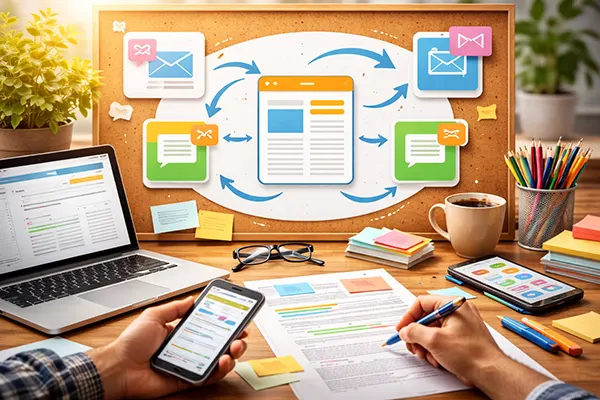
How Content Recycling Can Support Income from Home
Many people who work remotely rely on content creation as part of their income. Bloggers, copywriters, consultants and educators often maintain multiple communication channels. Recycling content allows them to produce more output without increasing workload.
This method also improves visibility. When the same idea appears in several formats, it reaches readers who prefer different ways of consuming information. Some will read the full article, others will discover it through a short post or email summary.
Another advantage is consistency. Audiences trust authors who publish regularly. Content recycling helps maintain that rhythm because one well-prepared article can support several weeks of smaller publications.
Common Mistakes to Avoid When Recycling Content
One common mistake is copying entire paragraphs without adapting them to the new format. Short posts should be concise and structured for quick reading. Simply pasting text from the original article often reduces clarity.
Another issue is repeating identical messages across every channel. Effective recycling means presenting the same idea from slightly different angles. For example, one post may highlight a statistic while another explains a practical example.
Finally, authors should maintain accuracy and relevance. Even when content is shortened, the information must remain correct and useful. Readers recognise well-prepared material, and this strengthens long-term trust in the author’s work.